China remains a major sourcing base for Adult Electric Bike products, serving retailers, distributors, and mobility brands worldwide. Its supplier network includes established manufacturers, specialized factories, and flexible original equipment partners. However, choosing a reliable partner requires more than comparing prices. Product quality can vary significantly between similar-looking models.
This guide examines leading Chinese suppliers through practical buying criteria. These include factory experience, production capacity, battery quality, motor performance, frame design, and after-sales support. It also considers export experience and communication standards. A dependable supplier should provide clear specifications, testing records, sample units, and traceable component information. Buyers should also confirm compliance with destination-market requirements before placing large orders.
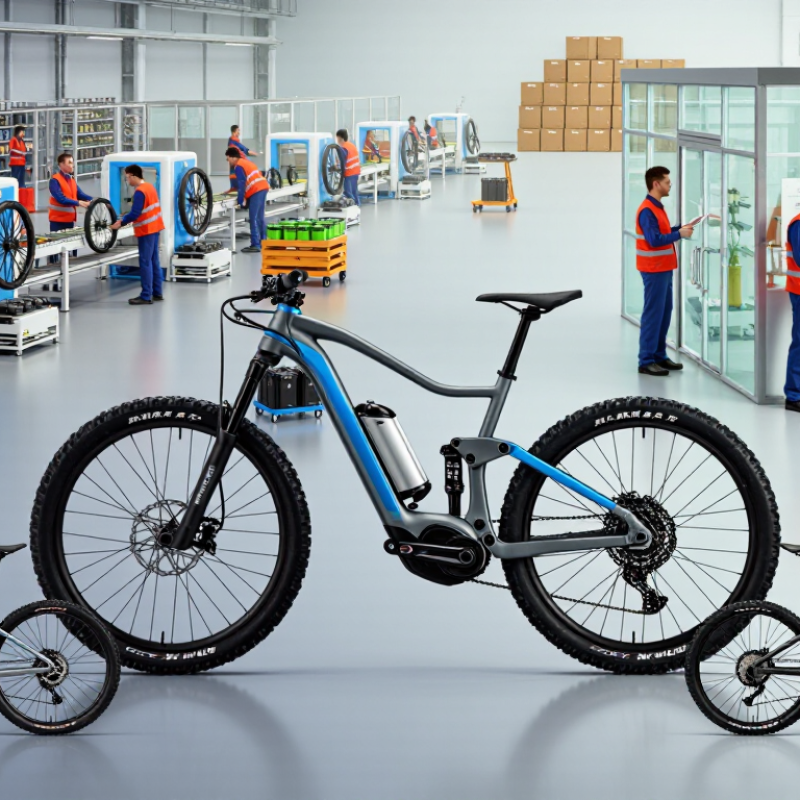
Details matter. Ask about battery cell brands, charger protection, waterproof ratings, warranty coverage, and spare-part availability. Request photos of assembly lines and finished inspections. A supplier with consistent documentation usually creates fewer surprises during delivery. Still, no supplier is perfect. A polished catalog can hide weak quality control, delayed responses, or unclear warranty terms. Independent verification remains valuable.
This overview is designed for global buyers who need informed, practical decisions. It does not treat factory size as the only measure of reliability. Smaller manufacturers may offer careful customization, while larger companies may provide stronger production stability. The right choice depends on order volume, target customers, budget, and service expectations. Real purchasing experience often reveals gaps that brochures never mention. Careful comparison is essential.
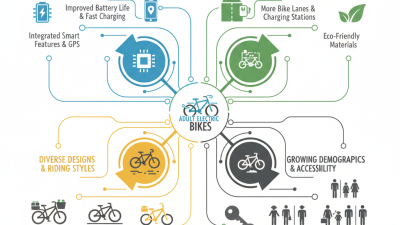
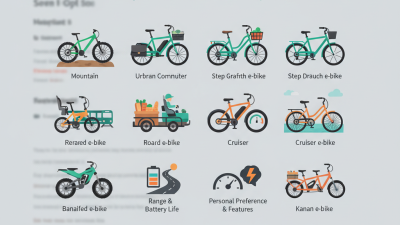
Adult electric bikes now serve several practical roles, from commuting to assisted touring. City models use upright frames, lights, racks, and 250–500 watt motors. Trekking models add suspension and wider tires for uneven roads. Cargo bikes carry children or goods, while folding models suit apartments and public transport. Step-through frames help riders with limited mobility.
Battery capacity usually ranges from 400 to 750 watt-hours. Real-world range depends on rider weight, hills, temperature, tire pressure, and assist level. Hydraulic disc brakes improve control, especially on wet descents. Torque sensors feel more natural than basic cadence sensors, but they increase cost. A useful display should show battery percentage, speed, assist mode, and fault codes. More features are not always better.
Market estimates differ because reports classify speed pedelecs and low-speed bicycles differently. Fortune Business Insights valued the global electric bike market at about US$43 billion in 2024. Grand View Research estimated a similar market near US$43.7 billion in 2023, with continued growth through 2030. These figures indicate strong demand, not guaranteed profit. Global buyers should verify battery test reports, charger protection, frame load ratings, and after-sales parts access. Compliance requirements also vary by destination, including limits for motor power, assisted speed, lighting, and battery transport. Supplier claims need checking. A polished catalogue cannot replace independent testing.
Maximum assisted-speed limits are an important product-planning factor for global buyers. The comparison below uses commonly referenced regulatory limits and excludes company or brand data.
China and the European Union generally use a 25 km/h pedal-assist ceiling for standard electric bicycles. In the United States, Class 1 and Class 2 e-bikes are commonly limited to 20 mph (approximately 32.2 km/h), while Class 3 is commonly limited to 28 mph (approximately 45.1 km/h) where adopted by state law. Local requirements may also cover power, equipment, registration, and road access.
Reference sources: EU Directive 2002/24/EC; China GB 17761-2018; U.S. Consumer Product Safety Commission e-bike classification guidance.
China has become a leading source of adult electric bikes because its manufacturing base is broad and experienced. Its mature bicycle industry supports efficient frame production, motor integration, and battery assembly. Factories often work with aluminum alloys, hydraulic brakes, suspension systems, and practical commuter designs. These capabilities help suppliers serve different riding conditions and buyer requirements. Small details matter. Wheel size, payload capacity, charger design, and corrosion resistance can affect daily use.
Global buyers can compare many specifications within one sourcing market. Experienced suppliers usually provide product drawings, sample units, quality records, and packaging details. They can also discuss adjustments for city commuting, leisure riding, or heavier adult riders. Reliable sourcing requires more than an attractive quotation. Factory audits, sample testing, and production inspections reduce avoidable risks. Buyers should request battery safety documents and region-specific compliance evidence. Clear records build confidence.
The process is not flawless. A low quotation may conceal weaker components, limited testing, or inconsistent assembly. Some buyers focus on appearance and overlook service parts. That mistake can become expensive after delivery. In practice, successful purchasing depends on direct communication and careful verification. Suppliers that welcome technical questions often show stronger professional discipline. Buyers should still check every claim independently, especially for range, load capacity, charging time, and warranty support. Supplier performance can vary widely.
Choosing China’s top adult electric bike suppliers requires more than comparing catalog prices. A reliable evaluation begins with factory evidence, not attractive product photos. Ask for business licenses, production capacity, quality records, and recent export experience. Review battery test reports, charger specifications, motor ratings, and applicable safety certifications. Documents should match the exact model, not a similar sample.
Request a working sample before placing a large order. Check welding points, brake response, frame alignment, cable protection, and battery fitting. Ride it on smooth pavement and rougher ground. Small faults often appear there. Discuss inspection procedures, spare parts, warranty handling, and delivery responsibilities in writing. Clear answers usually matter more than fast replies. However, a polished factory visit can still hide weak after-sales systems. Independent inspection is worth considering, even when it increases the budget.
Tips: Compare at least three suppliers using the same checklist. Ask for production videos with visible dates. Confirm whether replacement batteries and controllers remain available. Test packaging by checking corner protection and moisture barriers. Do not accept vague promises about range; request test conditions, rider weight, terrain, and temperature. My checklist is not perfect, and early assumptions can be wrong. Keep revising it after every sample, inspection, and customer complaint.
China Top Adult Electric Bike Suppliers for Global Buyers
Global demand makes compliance a purchasing issue, not a paperwork exercise. The IEA reported that electric two- and three-wheeler sales exceeded 25 million units worldwide in 2023. CONEBI’s 2024 European market profile recorded approximately 5.1 million e-bikes sold in Europe during 2023. These figures show strong demand, but they also increase the cost of weak quality control.
Reliable suppliers should provide test evidence for the destination market. European buyers commonly review EN 15194, EMC, RoHS, and battery transport documentation under UN 38.3. U.S. buyers often request evidence aligned with UL 2849 and UL 2271. Requirements can differ by state, country, and sales channel. A certificate alone is not enough. Buyers should verify the issuing laboratory, report number, product model, battery chemistry, and test date. Paperwork is not proof.
Factory audits should inspect weld penetration, brake performance, charger protection, cable routing, and battery enclosure sealing. Ask for production samples, not only showroom units. Record serial numbers and retain independent test samples. Battery traceability matters during recalls or shipping investigations. In my experience, suppliers may pass a sample inspection while later changing cells or controllers. That gap matters. A second audit is sometimes wiser than a lower unit price. Even experienced buyers can miss software changes, connector heating, or brake wear after extended use. Quality systems need field feedback, not just laboratory results.
| Evaluation Dimension | Key Requirement or Reference | Typical Buyer Acceptance Criteria | Recommended Evidence from Supplier | Global Buyer Risk to Check |
|---|---|---|---|---|
| EU EPAC Classification | For a conventional EU electrically assisted pedal cycle, assistance is generally limited to 25 km/h and the motor continuous rated power is generally limited to 250 W. | The delivered configuration matches the declared speed, power, pedal-assistance, and control settings for the destination market. | Technical specification, controller settings, motor rating sheet, conformity assessment documents, and production sample test results. | A model marketed as a bicycle may be classified differently if its speed, power, throttle, or operating mode exceeds local limits. |
| European Product Safety Standard | EN 15194 covers safety requirements and test methods for electrically power assisted cycles within its stated scope. | The complete vehicle, electrical system, mechanical parts, markings, and instructions are evaluated against the applicable edition and destination-market rules. | Independent laboratory report, risk assessment, technical file, user manual, warning labels, and declaration of conformity where applicable. | A battery-only report or component certificate does not prove compliance of the complete electric bicycle. |
| UK EAPC Requirements | In Great Britain, an electrically assisted pedal cycle generally requires operable pedals, assistance cut-off at 15.5 mph, and a motor output not exceeding 250 W for EAPC treatment; minimum rider-age rules also apply. | The configuration, labels, manual, and conformity documentation match the current UK classification and intended use. | UK-focused technical file, speed and power test report, label artwork, manual, and conformity declaration. | Rules for road use, imports, and modified products can differ from general consumer-product requirements. |
| United States Market Classification | US e-bike definitions and requirements may vary by state. A common three-class framework distinguishes pedal-assist limits and throttle operation, but state law controls market use. | The product is configured and labeled for the specific states and channels where it will be sold. | State-by-state compliance review, class label, speed-control test, owner manual, and electrical safety test documentation. | A single national specification may not satisfy every state, retailer, insurer, or local authority. |
| Electrical System Safety | The battery, charger, wiring, controller, display, and motor should be assessed as a coordinated system. UL 2849 is a recognized US reference for electrical systems of e-bikes. | No exposed live parts, secure connectors, adequate insulation, controlled charging, and stable operation under normal and foreseeable abnormal conditions. | Complete-system test report, wiring diagram, charger specification, insulation test results, thermal test results, and production inspection records. | Testing only the battery or charger separately may leave system-level fire, shock, or overheating risks undetected. |
| Lithium Battery Cell and Pack Safety | IEC 62133-2 is a widely used safety reference for portable lithium secondary cells and batteries. The applicable edition and product scope must be confirmed. | Cells are traceable, the pack has a suitable battery-management system, and overcharge, over-discharge, over-current, short-circuit, and thermal protection are verified. | Battery pack report, cell traceability, BMS specification, protection-function test results, cycle-life data, and incoming-cell inspection records. | Uncontrolled cell substitutions, inconsistent capacity, counterfeit cells, or undocumented BMS firmware changes can create serious safety risks. |
| Battery Transport Compliance | Lithium-ion batteries transported by air generally require applicable UN 38.3 testing and transport documentation under dangerous-goods rules. | The exact battery model, watt-hour rating, packaging, labels, shipping papers, and transport mode are consistent. | UN 38.3 test summary, safety data sheet, battery specification, packaging instructions, and dangerous-goods declaration where required. | A report for a different battery revision or capacity may not cover the supplied product. |
| Charger and Mains Compatibility | The charger must be compatible with the battery chemistry, nominal voltage, charging profile, plug type, mains voltage, frequency, and destination-market requirements. | Charging terminates correctly, the charger remains thermally stable, and the supplied plug, fuse, and input rating are suitable for the destination. | Charger test report, input/output ratings, efficiency data, thermal test, plug approval documentation, and sample charging records. | A low-cost or mismatched charger can cause overheating, premature battery degradation, or fire. |
| Water and Dust Protection | An IP rating should be declared only when supported by testing under IEC 60529 or an equivalent applicable method. | The declared rating reflects the complete tested enclosure and does not imply that the bike is safe to submerge or pressure-wash. | IP test report, sealing inspection checklist, connector protection design, and water-ingress corrective-action records. | Water resistance can decline after impact, aging, servicing, or cable replacement. |
| Frame and Fork Durability | Frame, fork, handlebar, stem, seat post, and attachment points should be tested for strength, fatigue, and foreseeable misuse according to the applicable bicycle standard. | No cracks, permanent deformation, loose interfaces, or unsafe steering behavior after endurance and impact testing. | Material specifications, welding inspection records, fatigue-test report, torque records, and batch traceability. | Overloading, poor weld quality, incorrect torque, and unapproved frame modifications can cause structural failure. |
| Brake Performance | Brakes must provide controlled stopping performance for the declared maximum mass, speed, tire configuration, and intended terrain. | Front and rear braking are balanced, brake cut-off functions work correctly, and stopping performance remains stable after repeated use. | Brake test report, pad and rotor specifications, cable or hose inspection, brake cut-off test, and sample road-test record. | Higher total weight and speed increase stopping distance and thermal load on brake components. |
| Lighting, Reflectors, and Visibility | Lighting and reflector requirements vary by destination market and may depend on road-use classification. | The bike includes the legally required front, rear, side, and reflective equipment for the target market, with secure mounting and visible markings. | Light specifications, photometric or market-specific test records, wiring diagram, mounting inspection, and labeling artwork. | A component that is acceptable for off-road use may not meet public-road requirements. |
| Software and Speed Control | Assistance cut-off, throttle behavior, walk-assist mode, tamper resistance, and restart behavior should match the declared market configuration. | The delivered firmware cannot unintentionally exceed the declared limit, and software changes are controlled by revision and approval records. | Firmware version record, configuration-lock procedure, speed test, diagnostic procedure, and change-control log. | A firmware update or dealer setting may change the legal classification without changing the product appearance. |
| EMC and Radio Function | Electronic components should meet applicable electromagnetic compatibility requirements; wireless functions may require additional radio approvals in the destination market. | The bike does not cause harmful interference and maintains reliable operation near common electronic equipment. | EMC test report, wireless-module approval documents where applicable, antenna information, and final-product configuration record. | Approval for an individual module may not cover the final bicycle after enclosure, wiring, or firmware changes. |
| Production Quality Control | A documented quality-management process should control incoming materials, assembly, testing, nonconformities, corrective actions, and traceability. | Every finished unit receives documented safety and functional checks before shipment. | Quality manual, inspection plan, sampling standard, calibration records, final-test checklist, defect reports, and batch traceability. | A valid factory audit or quality certificate does not guarantee that every shipment has identical components and settings. |
| Pre-Shipment Inspection | Inspection should cover appearance, dimensions, torque, battery condition, charging, brakes, lights, controls, accessories, packaging, and documents. | An approved sample and a written acceptance limit are used before release of the shipment. | Signed inspection report, photographs, serial-number list, defect classification, carton-drop results, and loading record. | Visual inspection alone may miss battery, firmware, torque, braking, or water-ingress problems. |
| User Documentation and Labels | Instructions should cover charging, storage, inspection, maintenance, battery disposal, maximum load, warnings, and foreseeable misuse in the destination language. | Manuals and labels are accurate, legible, durable, translated, and consistent with the supplied hardware and software. | Final manual, label drawings, warning review, translation validation, spare-parts list, and service procedures. | Incorrect instructions or missing warnings can increase liability even when the physical product passes testing. |
| Warranty and After-Sales Support | Support should cover battery warranty terms, replacement parts, diagnostic tools, repair procedures, software support, and incident reporting. | Critical replacement parts and technical responses are available within an agreed service period. | Warranty policy, parts availability statement, service-level agreement, troubleshooting guide, recall procedure, and failure-analysis process. | Poor parts availability can make a compliant product unsafe or uneconomical to maintain. |
| Environmental and End-of-Life Duties | Packaging, batteries, electrical equipment, and recycling obligations depend on the destination market and importer or producer role. | The supply arrangement identifies responsible parties for packaging, battery collection, recycling, and disposal information. | Material declarations, battery recycling instructions, packaging specifications, restricted-substance documentation, and market-specific registration records where required. | Environmental obligations may apply to the importer even when the product is manufactured overseas. |

Note: Requirements vary by destination country, state, product configuration, and intended use. Buyers should verify the current legal requirements and obtain independent testing for the exact production model, battery, charger, firmware, and labeling configuration.
Ordering begins with technical clarity, not a low unit price. The IEA’s Global EV Outlook 2024 reports that electric two- and three-wheelers remain the world’s largest electrified road-transport segment. Ask suppliers for motor ratings, battery capacity, charger specifications, test reports, and production lead times. Confirm the correct HS code and Incoterm before payment. A signed specification sheet prevents costly changes.
Shipping needs equal attention. UNCTAD’s Review of Maritime Transport 2024 highlights continuing disruption and volatility across global shipping routes. Request carton dimensions, gross weight, pallet plans, and dangerous-goods documentation before booking freight. Lithium batteries require appropriate testing records, including UN 38.3 evidence and a current safety data sheet. Check whether the quotation includes port charges, customs clearance, insurance, and final delivery. Small omissions become expensive.
After-sales service should be measurable. Require a written warranty, fault-response time, replacement-part availability, and repair guidance in English. Good suppliers can identify a controller or sensor fault from photographs and short videos. Keep a starter stock of displays, chargers, brake sensors, and inner tubes. I have seen buyers focus on the first container and overlook the second year. That is an uncomfortable mistake. A realistic service agreement should define remote diagnosis within two business days and replacement dispatch timelines. Supplier audits should also review serial-number tracking and quality records, not only polished factory videos.