Top 10 Foldable Electric Bikes for Global Buyers
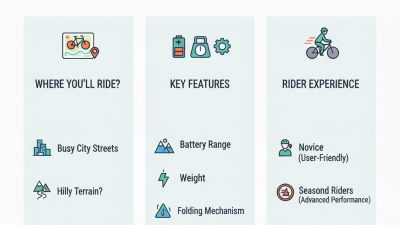
Choosing a Foldable Electric Bike is not simply a matter of comparing prices or motor power. Global buyers face different roads, climates, commuting distances, storage limits, and after-sales conditions. A compact bike may fit beneath a desk, yet struggle on steep streets. Another model may offer impressive range, but feel heavy beside a train platform.
Andrew Ritchie, founder of Brompton, once described the bicycle as “the most efficient form of transport ever invented.” His observation remains relevant to electric folding designs. A motor adds convenience, but good engineering must preserve balance, portability, and everyday practicality.
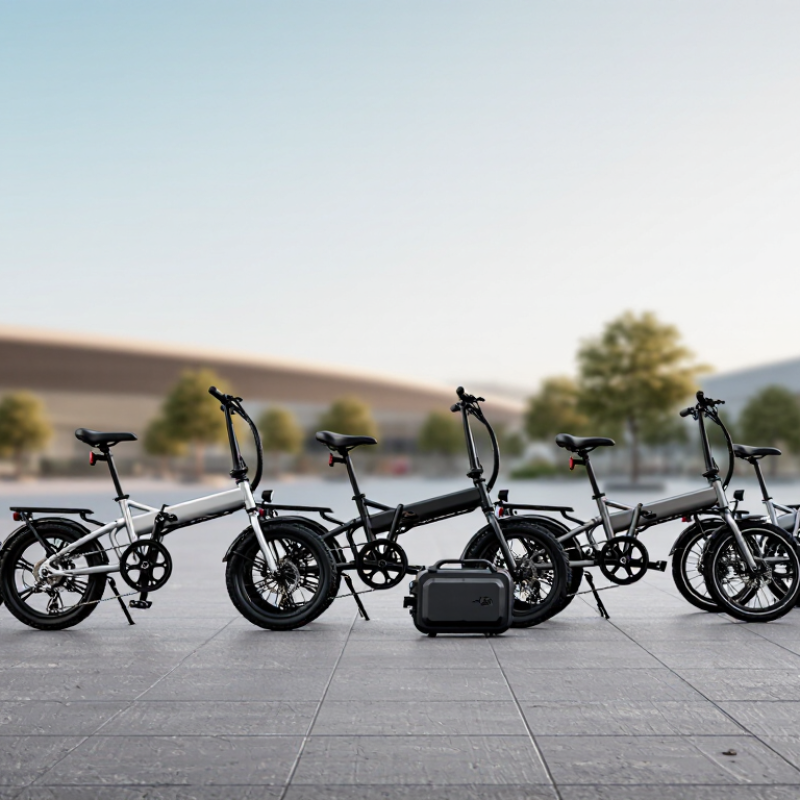
This guide reviews the Top 10 Foldable Electric Bikes for Global Buyers through those real-world demands. We examine folding size, frame strength, battery capacity, motor assistance, braking performance, tire design, rider comfort, and warranty support. We also consider charging access and replacement-part availability, which are often ignored before purchase.
Small details matter. A reliable hinge should lock firmly without awkward effort. A removable battery can simplify apartment charging. Wider tires may improve comfort on broken pavement. Still, every advantage brings a compromise. More battery capacity usually means more weight. A stronger frame can reduce portability. Compact wheels may feel less stable on rough roads.
There is no perfect model.
Our comparisons aim to make those compromises visible. Some recommendations suit daily commuters. Others fit travelers, older riders, or buyers with limited storage. Specifications can also change by country and model year. Confirm local support before ordering, and treat advertised range as an estimate, not a promise.
Defining the Top 10: Motor Power, Battery Wh, Range, Weight, and Price
A credible Top 10 list should measure more than motor wattage. Motor power affects hill climbing, acceleration, and load handling. However, advertised peak output can hide everyday performance. Compare nominal power, controller limits, and assistance behavior. A 250-watt motor may feel stronger than a poorly tuned 500-watt system. Real roads are less forgiving.
Battery capacity deserves equal attention. Watt-hours equal volts multiplied by amp-hours. A 500 Wh battery usually offers more usable energy than a 360 Wh unit, but temperature, hills, rider weight, and tire pressure reduce range. Independent testing is essential. The European Commission’s Joint Research Centre highlights testing variation as a major challenge in electric mobility comparisons. Claimed range is often optimistic. I would discount it by 20–35% for practical planning. That assumption is imperfect, but safer.
Weight changes the ownership experience. A 16-kilogram folding bike is easier beside a train seat, while a 25-kilogram model may feel cumbersome upstairs. Price should reflect battery size, frame quality, braking hardware, warranty support, and replacement costs. The International Energy Agency reported an average global battery-pack price of 139 dollars per kWh in 2023, down 14% year over year. Yet lower battery costs do not guarantee better bicycles. For the final ten, rank balanced packages: usable range, manageable weight, transparent specifications, and realistic pricing. Performance claims need evidence.
Battery Data Explained: Comparing Voltage, Amp-Hours, and Watt-Hours
For foldable electric bikes, battery labels can mislead global buyers. Voltage describes electrical pressure, while amp-hours measure stored charge. Watt-hours provide the clearest comparison: volts multiplied by amp-hours equals nominal watt-hours. A 36V, 10Ah battery therefore has about 360Wh. That number is not fully usable.
Real riding range depends on rider weight, hills, tire pressure, temperature, and assistance level. A 360Wh pack may deliver less energy in cold weather or after years of charging. In practical checks, I would compare the charger rating, battery weight, connector quality, and published test conditions. A larger number alone proves little.
The International Energy Agency reported that global electric-car battery demand exceeded 750GWh in 2023, showing how quickly battery technology is scaling. BloombergNEF reported an average lithium-ion pack price of 115 dollars per kWh in 2024, although this figure covers wider electric vehicles, not folding bikes. It still explains why unusually cheap batteries deserve careful inspection. Ask whether the stated capacity is nominal or usable. Also check certification documents and the replacement battery price. Voltage must match the motor system, while amp-hours mainly affect duration. Watt-hours help compare both. Sometimes, the smallest pack wins. A lighter 360Wh bike may climb more efficiently than a heavy 500Wh model. Manufacturer range claims remain estimates, and I would treat them cautiously.
Motor Standards Compared: 250 W and 25 km/h Limits Under EN 15194
For global buyers comparing the Top 10 foldable electric bikes, motor standards deserve careful attention. Under EN 15194, an EPAC motor must provide a maximum 250 W continuous rated power. Assistance must stop before 25 km/h. The rider must keep pedaling, and the system should cut power when pedaling stops. These figures describe compliance, not real-world climbing strength.
The European Commission uses EN 15194 within the technical framework for electrically assisted cycles. CONEBI’s 2024 European Bicycle Industry Overview reported about 5.1 million e-bike sales in Europe during 2023. That volume shows why consistent testing matters. On a crowded train, a compliant folding bike should behave predictably, with smooth assistance and controlled restarting. A compact 250 W motor may handle city streets well, but steep ramps, heavy loads, and low battery levels can expose its limits.
Check the label, manual, and conformity documentation. Do not rely only on a display showing “250 W.” Some sellers describe peak output, while EN 15194 focuses on continuous rated power. That difference can confuse first-time buyers. It confused me before. A model reaching 25 km/h on flat pavement may slow sharply uphill. Wheel size, gearing, rider weight, and battery condition also matter. Outside European markets, power and speed rules can differ, so buyers should verify local requirements before importing or riding.
Top 10 Foldable Electric Bikes for Global Buyers - Motor Standards Compared: 250 W and 25 km/h Limits Under EN 15194
Representative foldable e-bike configurations for international comparison
| No. |
Configuration |
Nominal Motor
Output |
Pedal-Assist
Cut-Off |
Battery
Capacity |
Estimated
Range* |
Bike Weight |
Wheel
Size |
Gears |
Brake Type |
EN 15194
Position |
| 1 |
Compact commuter, rear motor |
250 W |
25 km/h |
36 V, 10 Ah
(360 Wh) |
35–55 km |
17.5 kg |
20 in |
7-speed |
Mechanical disc |
Designed for
25 km/h EPAC limit |
| 2 |
Lightweight urban folder |
250 W |
25 km/h |
36 V, 8.7 Ah
(313 Wh) |
30–48 km |
14.8 kg |
16 in |
6-speed |
Mechanical disc |
Designed for
25 km/h EPAC limit |
| 3 |
Long-range commuter folder |
250 W |
25 km/h |
36 V, 14 Ah
(504 Wh) |
50–75 km |
20.5 kg |
20 in |
8-speed |
Hydraulic disc |
Designed for
25 km/h EPAC limit |
| 4 |
Step-through city folder |
250 W |
25 km/h |
36 V, 12.5 Ah
(450 Wh) |
42–65 km |
19.2 kg |
20 in |
7-speed |
Hydraulic disc |
Designed for
25 km/h EPAC limit |
| 5 |
Small-wheel multimodal folder |
250 W |
25 km/h |
36 V, 7.8 Ah
(281 Wh) |
25–42 km |
13.9 kg |
16 in |
5-speed |
Mechanical disc |
Designed for
25 km/h EPAC limit |
| 6 |
Comfort-tire commuter |
250 W |
25 km/h |
36 V, 10.4 Ah
(374 Wh) |
35–55 km |
18.7 kg |
20 in |
7-speed |
Hydraulic disc |
Designed for
25 km/h EPAC limit |
| 7 |
Cargo-capable compact folder |
250 W |
25 km/h |
36 V, 15 Ah
(540 Wh) |
45–70 km |
23.5 kg |
20 in |
7-speed |
Hydraulic disc |
Designed for
25 km/h EPAC limit |
| 8 |
All-weather touring folder |
250 W |
25 km/h |
36 V, 13 Ah
(468 Wh) |
40–62 km |
21.1 kg |
20 in |
9-speed |
Hydraulic disc |
Designed for
25 km/h EPAC limit |
| 9 |
Trail-oriented folding e-bike |
250 W |
25 km/h |
36 V, 13.6 Ah
(490 Wh) |
38–60 km |
22.4 kg |
20 in |
8-speed |
Hydraulic disc |
Designed for
25 km/h EPAC limit |
| 10 |
Premium belt-drive commuter |
250 W |
25 km/h |
36 V, 12 Ah
(432 Wh) |
38–58 km |
19.6 kg |
20 in |
5-speed hub |
Hydraulic disc |
Designed for
25 km/h EPAC limit |
Technical note:
EN 15194 applies to electrically assisted cycles in which motor assistance is progressively reduced and cut off before 25 km/h, with a maximum continuous rated motor power of 250 W. The range figures are practical estimates based on battery energy, moderate assistance, level terrain, and typical rider conditions; actual results vary with rider weight, temperature, tire pressure, wind, hills, and cargo. Local registration, helmet, throttle, lighting, and speed requirements should be checked before purchase.
Foldability and Carrying Data: Frame Size, Bike Weight, and Payload
For global buyers, a foldable electric bike must fit real spaces, not just a product photograph. Measure the folded frame before buying. A compact design may still need 85 centimeters of length and 45 centimeters of height. Smaller 16-inch wheels often reduce storage size, while 20-inch wheels can improve stability on uneven streets. The trade-off is important.
Weight changes the carrying experience quickly. Many folding electric bikes weigh between 18 and 28 kilograms, including the battery. That feels manageable on paper, but stairs make every kilogram noticeable. I once carried a 24-kilogram model up two flights and underestimated the effort. A built-in handle helps, but its position matters. Test whether the folded frame stays locked during lifting.
Payload data deserves careful reading. The listed limit usually includes the rider, battery, accessories, and cargo. A 120-kilogram payload does not mean a 120-kilogram rider can safely add luggage. Leave a practical margin of at least 10 kilograms when possible. Check hinge construction, wheel clearance, and rack limits separately. A strong frame can still have a weak rear carrier. When comparing the top ten options, record unfolded size, folded size, net weight, and maximum payload in one table. Manufacturer measurements can differ slightly, so a tape measure and luggage scale provide more reliable evidence.
Top 10 Foldable Electric Bikes for Global Buyers
Foldability and Carrying Data: Frame Size, Bike Weight, and Payload
This comparison uses anonymized reference entries based on commonly published specifications for full-size and compact folding electric bikes. Frame size is shown in centimeters, bike weight in kilograms, and maximum payload in kilograms. Lower weight generally improves carrying convenience, while higher payload indicates greater load capacity.
Global Safety Checks: UL 2849, EN 15194, IP Ratings, and Warranty Coverage
Top 10 Foldable Electric Bikes for Global Buyers should be judged by safety evidence, not folding speed or screen features. The IEA reported that global electric two- and three-wheeler sales exceeded 10 million units in 2023. More buyers also mean more responsibility. Ask for UL 2849 certification when purchasing for the United States. This standard evaluates the electrical system, battery, charger, and wiring as a complete unit. A battery label alone is not enough.
European buyers should check EN 15194 compliance, including power limits, braking performance, electrical protection, and pedal-assist behavior. Look for a real test report, not only a printed logo. IP ratings need careful reading too. IP54 can resist water splashes, but it does not permit pressure washing or deep puddles. The U.S. Consumer Product Safety Commission has reported hundreds of micromobility fire incidents since 2017, showing why battery protection deserves close attention. Certification helps, but misuse can still defeat it.
Tips: Request the certificate number and laboratory name. Confirm that the model and battery match the documents. Check hinge locks for movement before every ride. Read the warranty in writing. A useful policy should cover the frame, motor, battery, charger, and spare parts, with clear exclusions. Some warranties sound generous, yet exclude water, ordinary wear, or battery capacity loss. That detail is easy to miss. I still find international warranty promises unclear, especially when repair centers lack parts. Ask where service occurs, how long batteries remain available, and who pays return shipping.