What is an Electric Bike Kit Conversion and How Does It Work?
The popularity of electric bikes is surging. A recent report projects that the global electric bike market could reach over $38 billion by 2025. This growth is fueled by the increasing demand for sustainable transportation options. Among the various ways to enter this market, Electric Bike Kit Conversion stands out.
Electric Bike Kit Conversion allows traditional bicycles to be transformed into electric-powered vehicles. This process typically involves adding a motor, battery, and control system. Many cyclists appreciate this conversion for its cost-effectiveness compared to buying a new electric bike. However, understanding the installation process can be challenging for newcomers.
Despite its advantages, Electric Bike Kit Conversion might not always be straightforward. Users often face compatibility issues with their existing bike models. Research indicates that roughly 30% of conversion attempts lead to unexpected technical difficulties. It's crucial for consumers to weigh their options carefully. With the right knowledge and preparation, converting a bike can be a rewarding experience.

Understanding Electric Bike Kits: An Overview of Components and Types
Electric bike kits have gained popularity in recent years. These kits allow you to convert a traditional bicycle into an electric one. Understanding the components involved is essential for anyone looking to make this upgrade.
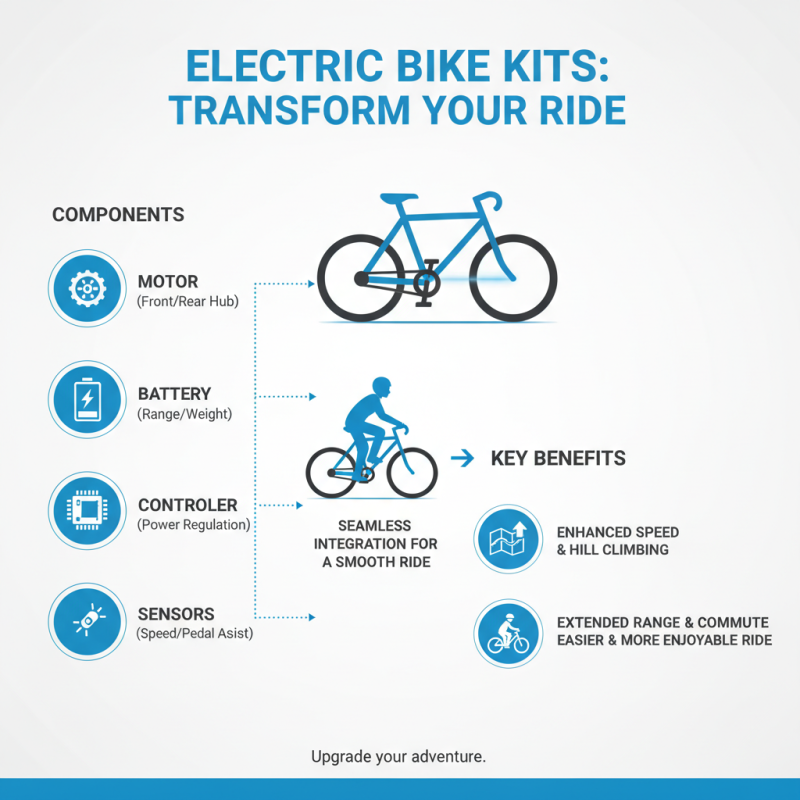
Typically, an electric bike kit consists of a motor, battery, controller, and sometimes a display. The motor can be mounted in various locations, like the wheel hub or crank. A battery powers the system, and its capacity influences the bike's range. The controller manages the power delivery, ensuring smooth acceleration. Displays often show speed, battery life, and distance traveled, helping riders monitor their journeys effectively.
However, not all kits are created equal. Some may lack detailed instructions, leaving users confused. Not every bike frame suits every kit, leading to compatibility issues. Installation can be challenging, and mistakes might result in poor performance. It's crucial to research and reflect on what fits your needs best. Embrace the learning curve and enjoy the process of electrifying your ride.
Key Benefits of Converting a Regular Bicycle to an Electric Bike
Converting a regular bicycle into an electric bike offers several key benefits. One major advantage is the enhanced range. With an electric bike kit, cyclists can travel further without exhausting themselves. Commuting to work or exploring new trails becomes more manageable. The added power can help tackle steep hills and long distances.
Another benefit is the environmental impact. Electric bikes produce fewer emissions than cars. They encourage more people to cycle. This shift can reduce traffic congestion. However, it’s essential to consider the battery's lifecycle and recycling options. Finding a balance is crucial.
Moreover, the conversion process can be an engaging and rewarding DIY project. Installing an electric kit allows individuals to personalize their bikes. However, it might not be as straightforward as it seems. Wiring and compatibility issues may arise, which can be frustrating. Reflecting on these challenges can lead to improvement and skill development.
How Electric Bike Kits Work: A Detailed Breakdown of System Components
Electric bike kits offer a transformative way to enhance a regular bicycle. These kits typically include essential components like a motor, battery, controller, and various sensors. The motor can be mounted either on the front or rear wheel. Batteries come in different capacities, influencing range and weight. A controller mediates between the battery and motor, regulating power output. The integration of these elements is crucial for a smooth ride.
Each component plays a significant role in performance. The placement of the motor impacts balance and handling. A rear motor provides better traction but can be heavier. Front motors give a more natural feel. Optimizing battery placement also matters. A well-positioned battery lowers the center of gravity. Sensors help in providing pedal assist, enhancing efficiency while riding.
Compatibility issues often arise during installation. Some bikes may require adjustments or additional tools. Ensuring that all parts work together is vital. In some cases, riders might find themselves needing extra help or guidance. The learning curve can be steep, leading to frustration. However, overcoming these challenges can result in a rewarding experience of riding with electric assistance.
Installation Process: Step-by-Step Guide to Electric Bike Kit Conversion
Electric bike kit conversion is becoming popular among cycling enthusiasts. Many cyclists seek this option to enhance their riding experience. The installation process can be quite straightforward, but it demands attention to detail. A typical e-bike conversion kit includes a motor, battery, and controller. Understanding how these components fit together is crucial for success.
To begin, some essential tools are necessary: a wrench set, screwdriver, and tire levers. Removing the bike’s front or rear wheel may be the first step, depending on the motor type. For example, a hub motor is installed directly into the wheel. Proper alignment is critical here. Misalignment can cause issues like uneven tire wear. The next step involves attaching the battery securely to the frame. It should be safe but accessible.
Connecting the motor to the controller follows. This step requires precision in wiring. Loose connections could impact performance. Reports indicate that nearly 30% of DIY conversions face issues due to improper wiring. Testing the system before hitting the road is vital. Take time to inspect all components once more. Remember, the conversion process may not yield a perfect result on the first try. It's okay to reflect on mistakes and learn from them.
Performance Metrics: Evaluating Speed, Range, and Efficiency in E-Bikes
Electric bikes, or e-bikes, have gained popularity for their impressive performance metrics, particularly in speed, range, and efficiency. The average e-bike can reach speeds of 20 to 28 mph. However, this varies based on factors like rider weight and terrain. According to a recent industry report, 85% of riders notice improved commuting times with e-bikes compared to traditional bicycles.
Range is a critical metric. Many e-bikes offer a range of 20 to 60 miles on a single charge. Battery capacity plays a role here. Most e-bike batteries start at around 400 Wh. Commuters might find 400 Wh sufficient, but those seeking longer trips may need larger ones, like 600 Wh or more. Yet, as battery size increases, weight and cost also rise.
Efficiency is another important factor. E-bikes typically consume between 15 to 25 Wh per mile. This efficiency translates to lower energy costs. On average, riders spend $0.03 to $0.05 per mile. While these numbers are encouraging, they can vary widely. Some bikes can struggle in hilly areas or if overloaded. Riders should consider their needs carefully for the best experience.
Performance Metrics of Electric Bike Conversion Kits