

7 Best Electric Bike Conversion Kits for Global Buyers
Choosing an electric bike conversion kit is not simply a matter of comparing motor wattage. A suitable system must match the bicycle frame, wheel size, battery position, riding terrain, and the rider’s mechanical confidence. For global buyers, shipping conditions, replacement parts, warranty support, charger compatibility, and local equipment rules also deserve attention. One impressive specification can hide a practical weakness.
Ed Benjamin, a longtime electric-bicycle industry consultant, has said, “The electric bicycle is the most efficient form of transportation ever devised.” That efficiency depends on thoughtful setup. A quiet hub motor may suit flat city streets, while a mid-drive system can provide better climbing control on steep roads. Battery range also varies sharply with rider weight, tire pressure, wind, temperature, and cargo. Numbers on a product page are only estimates.
This guide examines seven widely considered options in Electric Bike Kit Conversion, focusing on real-world usability rather than flashy claims. Each selection is assessed through motor performance, battery design, installation demands, braking needs, durability, and after-sales assistance. Some kits are beginner-friendly. Others require patience, tools, and careful alignment. No ranking is perfect. A kit that works beautifully on a commuter bike may disappoint on a heavy mountain frame. Buyers should inspect their bicycle before ordering, especially the dropout width, brake type, axle design, and available battery space. Small details matter. Safety matters more.
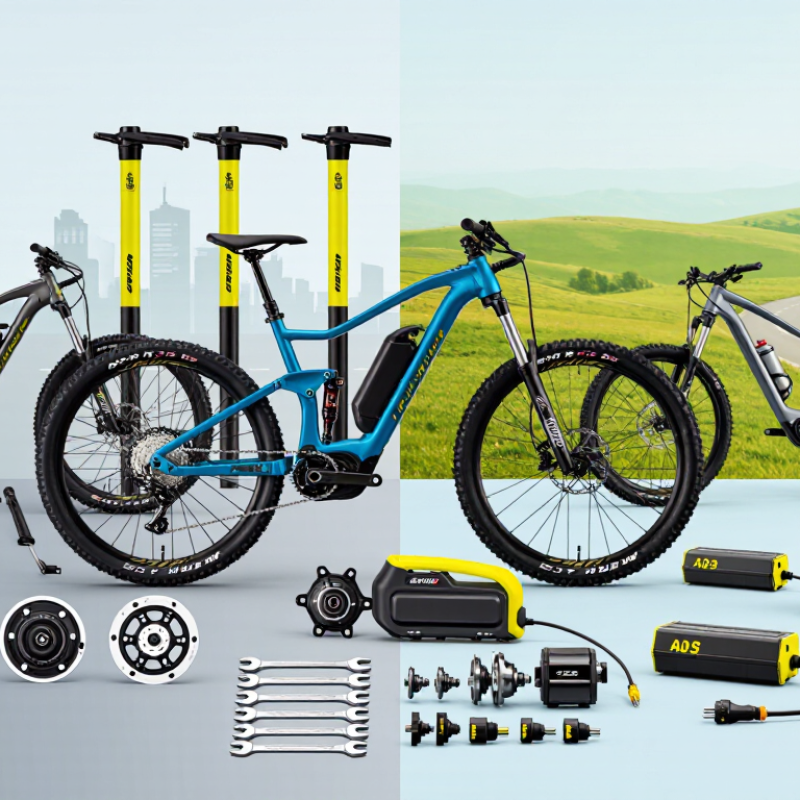
Global E-Bike Market Scope: 250W EU Pedelecs and 750W U.S. Limits
For global buyers, the best electric bike conversion kit depends on local power rules, not marketing claims. European pedelecs generally require a 250W continuous-rated motor, assistance stopping at 25 km/h. The European Commission’s Regulation (EU) No 168/2013 supports this framework. CONEBI’s European Bicycle Industry and Market Profile reported about five million e-bikes sold in Europe in 2023, showing strong demand for compliant systems.
The U.S. federal definition allows up to 750W and assistance below 20 mph, but state rules can differ. Class 1 and Class 3 systems use pedal assistance, while Class 2 systems may include a throttle. Buyers comparing seven shortlisted kits should check motor rating, speed settings, controller labels, battery certification, and brake-cutoff response. A 750W kit may be unsuitable on European roads. It may also exceed local trail limits in America.
Real installation work reveals small problems. A heavy battery can shift the bike’s balance. A torque sensor usually feels more natural than a basic cadence sensor, especially on wet hills. Yet sensor calibration is not always perfect. I would measure actual wheel speed, inspect cable protection, and test emergency braking before regular use. Reports from the International Energy Agency show electric two- and three-wheelers remain a major global electrification segment, but conversion-kit data is less transparent. That gap deserves caution.
| Configuration | Recommended Use | Motor Type | Rated Power | Typical Battery | Estimated Range | Compatible Wheel Sizes | Approx. Added Weight | Global Compliance Position |
|---|---|---|---|---|---|---|---|---|
| 1. EU City Pedelec Kit | Daily commuting, paved roads and moderate urban inclines | Front-hub motor with pedal-assist sensor | 250 W nominal | 36 V, 10 Ah Approx. 360 Wh |
35–65 km per charge | 26 in, 27.5 in, 28 in, and 700C | 6–8 kg | EU-friendly Suitable for a 250 W pedal-assist configuration when local speed, equipment, and certification rules are also met. |
| 2. EU Trekking Mid-Drive Kit | Long-distance touring, hills, and mixed-surface cycling | Mid-drive motor using the bicycle crankset | 250 W nominal | 36 V, 14 Ah Approx. 504 Wh |
45–85 km per charge | 26 in, 27.5 in, 28 in, and 700C | 7–10 kg | EU-friendly Provides efficient climbing performance while remaining within the common 250 W EU pedelec power class. |
| 3. U.S. Class 1 Commuter Kit | Urban commuting where throttle operation is not required | Rear-hub motor with pedal-assist sensor | 500 W nominal 750 W peak commonly available |
48 V, 12.5 Ah Approx. 600 Wh |
45–90 km per charge | 26 in, 27.5 in, 28 in, and 700C | 8–11 kg | U.S. Class 1 potential Can support a pedal-assist setup limited to 20 mph, subject to state and local requirements. |
| 4. U.S. Class 2 Utility Kit | Cargo carrying, stop-and-go traffic, and practical urban transport | Rear-hub motor with pedal assist and throttle | 500 W nominal 750 W peak commonly available |
48 V, 15 Ah Approx. 720 Wh |
50–100 km per charge | 20 in, 24 in, 26 in, and 27.5 in | 9–13 kg | U.S. Class 2 potential Designed around the U.S. 20 mph assisted-speed class, but throttle and equipment rules vary by jurisdiction. |
| 5. U.S. Class 3 Speed-Commuter Kit | Longer commutes and higher-speed paved-road travel | Rear-hub motor with pedal assist | 750 W nominal or less Check local limits |
48 V, 17.5 Ah Approx. 840 Wh |
55–110 km per charge | 26 in, 27.5 in, 28 in, and 700C | 9–13 kg | U.S. Class 3 potential May fit a 28 mph pedal-assist configuration where permitted; helmet, roadway, and registration rules can apply. |
| 6. Fat-Tire All-Terrain Kit | Snow, sand, gravel, forest paths, and wide-tire bicycles | Rear-hub motor with cadence or torque-assist control | 750 W nominal | 48 V, 20 Ah Approx. 960 Wh |
55–120 km per charge | 20 in, 24 in, 26 in, and 27.5 in fat-tire formats | 11–16 kg | Off-road / local-law dependent Power and speed may exceed EU pedelec or U.S. low-speed e-bike categories; verify road-use legality before conversion. |
| 7. Compact Folding-Bike Kit | Folding bicycles, apartment storage, train travel, and short trips | Front- or rear-hub motor with compact battery | 250–500 W nominal | 36 V, 10 Ah Approx. 360 Wh |
25–60 km per charge | 16 in, 20 in, and selected 24 in wheels | 6–9 kg | Market-specific Can be configured for EU 250 W pedelec use or U.S. low-speed e-bike classes, depending on speed control and local regulations. |
Technical figures are representative market ranges for conversion-kit configurations, not specifications for a particular brand or model. Actual range depends on rider weight, terrain, temperature, tire pressure, assist level, battery age, and riding speed. EU pedelec and U.S. e-bike classifications differ by country, state, and city; confirm applicable power, speed, throttle, lighting, helmet, and certification requirements before installation or road use.
Related Posts
-
China Top 10 Electric Bike Kit Conversion Suppliers?
-
Solutions for Achieving Ultimate Sound Quality with Best Ts100 Tws Earbud
-
How to Choose the Best Adult Electric Bike for Your Needs?
-
Transform Your Ride: Exploring the Benefits of Electric Bike Conversion Kits for Urban Commuting
-

How to Find Reliable Global Sourcing Suppliers
-

Discover the Best Ts300 TWS Earbuds for Your Needs Today?

