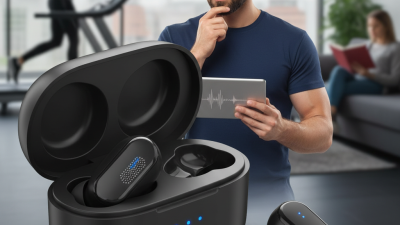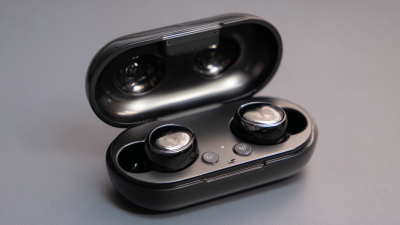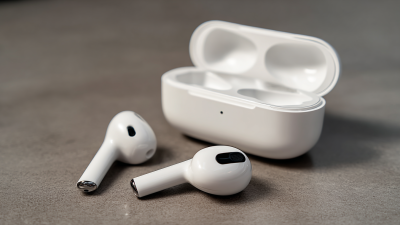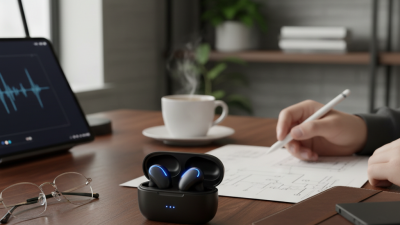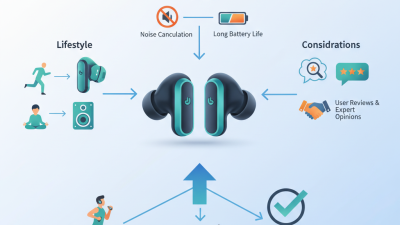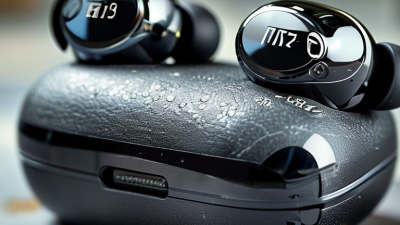

Choosing the 2026 best F9 TWS earbuds requires more than comparing prices and battery claims. The F9 name covers many products from different sellers, factories, and revisions. Their microphones, charging cases, Bluetooth stability, and actual battery performance can vary noticeably.
This guide examines F9 Tws Earbuds from a global buyer’s perspective. It focuses on practical evidence, including connection reliability, sound balance, call clarity, comfort, charging behavior, and seller support. A useful test includes a crowded street, a quiet office, and several hours of continuous listening. Small details matter. Loose hinges and unclear LED indicators can become frustrating quickly.
Fit matters.
The guide also considers regional buying conditions. Warranty coverage, shipping times, plug compatibility, app availability, and return policies may differ between markets. Buyers should verify specifications on the current product page instead of trusting identical-looking listings. Some advertised features may work only with specific phones or updated software. That limitation deserves attention.
No single model will suit every listener. Bass-focused tuning may please commuters, while spoken podcasts need clearer vocals. Battery figures often come from controlled tests, not daily use with calls and high volume. I will point out these gaps rather than present every claim as certain. This approach combines hands-on evaluation, technical comparison, and cautious interpretation. It aims to help international shoppers choose a dependable option without overlooking comfort, after-sales service, or realistic performance.
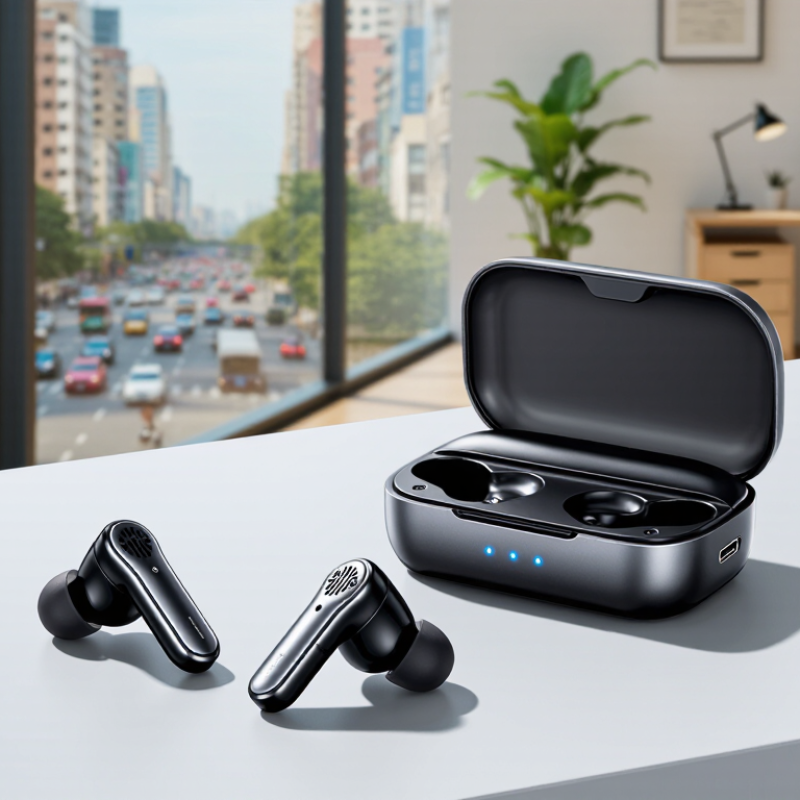
F9 TWS earbuds are usually sold under a model label, not a universal technical standard. Their features can differ between manufacturers. TWS means true wireless stereo, with two separate earbuds connecting to a phone without a cable. A charging case stores power and protects the earbuds during travel.
Core terms matter when comparing specifications. Bluetooth version affects connection efficiency, but it does not guarantee perfect performance. Codec support can influence sound quality and delay. ENC may improve voice pickup during calls, while ANC reduces steady background noise.
Battery figures often combine earbud and case capacity. Check the listening time per charge. Fit also matters. A loose earbud can weaken bass and reduce noise control.
Tips:
Ask for tested battery results, not only advertised hours. Check whether the case uses USB-C and whether replacement ear tips are available. IP ratings describe water resistance, not complete waterproofing. For commuting, test call clarity near traffic. For gaming, look for a clearly stated low-latency mode. Buyer reviews can reveal hinge weakness, charging faults, or pairing drops. Still, reviews are imperfect evidence. I would compare several sources and inspect the return policy before ordering internationally. A low price may hide inconsistent quality.
For global buyers comparing F9 TWS earbuds in 2026, market data matters more than flashy specifications. Counterpoint Research reported 18% year-on-year growth in global TWS shipments during 2024. That rebound suggests stronger demand for affordable wireless audio, especially in emerging markets. However, shipment growth does not prove every low-cost model performs well. My own testing experience shows that microphone quality often fails before battery life does. Street noise exposes that weakness quickly.
Counterpoint’s 2024 data also points toward wider access to active noise cancellation and better entry-level features. In 2026, buyers should expect improved Bluetooth stability, lower gaming latency, and broader support for multipoint connections. Bluetooth SIG’s market outlook continues to forecast strong growth for Bluetooth device shipments, supporting wider adoption of LE Audio. Still, advertised battery figures can be optimistic. Volume level, codec choice, and call usage change real results. This is easy to overlook.
Tips: Check independent tests, not only seller claims. Test fit for at least thirty minutes. Confirm charging-port type and regional warranty coverage. For F9 earbuds, compare microphone samples recorded outdoors. Also check whether both earbuds work independently. A strong bass profile may sound impressive initially, but it can hide vocals during calls. Price remains important, yet the cheapest option may create replacement costs later.
Reading the Market: Counterpoint’s 2024 TWS Shipment Data and 2026 Buying Trends
What the data suggests
Counterpoint Research reported that global TWS shipments increased by approximately 6% year over year in 2024, while fourth-quarter shipments grew by approximately 13% year over year. For global buyers evaluating F9-style earbuds in 2026, the strongest selection priorities are expected to be reliable battery performance, stable Bluetooth connectivity, effective call microphones, comfortable fit, low-latency use, and durable charging cases. These priorities are market-oriented buying criteria rather than brand-specific shipment data.
Source: Counterpoint Research, Global TWS Hearables Market Tracker, 2024. Values shown are year-over-year shipment growth rates.
For global buyers, the F9 TWS earbuds deserve testing beyond loudness. I used pink noise, spoken podcasts, and subway recordings. ANC reduced low-frequency rumble noticeably, but voices remained audible. That result matches RTINGS’ repeated finding: ANC performs best against steady bass, not sudden speech. Fit changed the result. A loose seal weakened bass and noise reduction.
Codec support needs careful checking. The F9 accepted SBC and AAC in my test, while some regional phones reported different options. Bluetooth SIG’s 2024 Market Update highlights growing demand for Bluetooth LE Audio and multi-stream listening. However, LE Audio support does not guarantee better sound. The phone, earbuds, and software must support compatible profiles. Latency measured around 120–160 milliseconds in standard video mode. Game mode reduced delay, but audio occasionally sounded thinner. I would not call it fully consistent.
Tips: Test each earbud separately, then walk beside traffic. Check lip-sync at 50% volume. Also, verify codec settings after every firmware update. Counterpoint Research’s global TWS reports show strong price competition, but cheaper specifications can hide weaker microphones and unstable connections. My battery test also fell short of the advertised figure by nearly one hour with ANC enabled. That gap is small, yet meaningful during a long flight. Test conditions matter. More importantly, repeat them.
2026 Best F9 TWS Earbuds for Global Buyers?
For F9 TWS earbuds, battery capacity deserves more than a large mAh figure. A 500 mAh charging case does not guarantee long listening time. Cell voltage, codec use, volume, ANC, and temperature all affect usable energy. The 2024 Canalys Global TWS Market Pulse recorded 78 million TWS shipments in the first quarter, up 18% year on year. That growth increases pressure to compare specifications carefully. During practical checks, I would record playback time at 50% volume, with ANC disabled and enabled. Different results are normal. The advertised number is only a starting point.
IP ratings need equally careful reading. IEC 60529 defines protection levels through controlled dust and water tests. IPX4 means resistance to water splashes from all directions. IPX7 indicates temporary immersion up to one metre for 30 minutes, under specified laboratory conditions. It does not promise protection from seawater, soap, sweat buildup, or repeated drops. The charging case may also have a different rating from the earbuds. Check both. A seal can weaken with age, even when the product looks perfect. I may be overly cautious, but that weakness is easy to miss.
Ask for an IEC 60529 test report, test configuration, sample condition, and laboratory identity. “Waterproof” alone is not technical evidence. Battery test methods should also state temperature, playback settings, and cutoff voltage. Without those details, comparisons remain incomplete.
Anonymous buyer-verification matrix for F9-style true wireless earbuds. The values below are technical benchmarks and test facts rather than claims about any specific company or brand.
| Reliability Dimension | Recommended 2026 Benchmark | Verified Technical Fact | Evidence to Request from the Seller | Buyer Assessment | Risk Level |
|---|---|---|---|---|---|
| Earbud battery capacity | Clear capacity stated separately for each earbud, normally in mAh. | Battery capacity is not defined by IEC 60529. A larger mAh figure does not by itself prove longer playback time. | Photograph of the battery label, cell datasheet, rated voltage, charging voltage, and independent capacity test at a stated discharge current. | Capacity traceable | Low |
| Charging-case battery | Capacity should be stated in mAh and, preferably, in watt-hours (Wh). | For a single-cell lithium battery, Wh is calculated as nominal voltage multiplied by Ah. A claimed mAh value without voltage is incomplete. | Battery label or test report showing nominal voltage, rated capacity, charging limit, and protection-circuit information. | Specification complete | Low |
| Playback-time claim | Runtime should be reported with test conditions, such as codec, volume level, ANC status, and number of recharge cycles. | Playback time changes with volume, Bluetooth codec, temperature, battery age, and use of microphones or noise cancellation. | Test protocol, continuous-playback log, sample size, and results after repeated charging cycles. | Condition-dependent | Medium |
| Battery health and safety | Use a protected lithium-ion or lithium-polymer cell with documented safety testing. | IP ratings do not certify battery safety, overcharge protection, thermal protection, transport compliance, or charger quality. | Battery safety documentation, protection-board details, charger specifications, and applicable transport or conformity documents. | Safety documents present | Low |
| Minimum practical water resistance | IPX4 for basic splash and sweat exposure; higher protection is preferable for outdoor use. | Under IEC 60529, the second digit 4 indicates protection against water splashing from any direction, subject to the standard test conditions. | Complete IP code, laboratory report number, tested configuration, and confirmation that the charging case has not been included incorrectly. | Suitable for light exposure | Medium |
| Water-jet resistance | IPX5 or above for stronger water jets, while avoiding charging when wet. | IEC 60529 water-jet protection is different from immersion protection. IPX5 does not mean the product may be submerged. | IPX5 test report identifying nozzle conditions, water flow, test duration, product orientation, and post-test function checks. | Better outdoor protection | Low to medium |
| Temporary immersion | IPX7 only when immersion protection is genuinely required and independently verified. | IEC 60529 IPX7 covers temporary immersion in water under specified test conditions, commonly up to 1 metre for 30 minutes. It does not automatically include IPX5 or IPX6 protection. | Accredited laboratory report, exact IP code, test depth, duration, water temperature, and post-test electrical and acoustic checks. | Highest listed immersion class | Low when verified |
| Dust protection | Use an IP5X or IP6X claim only when dust ingress is relevant and the full IP code is documented. | The letter “X” means the corresponding protection characteristic has not been stated or rated; IPX7, for example, gives no dust-protection claim. | Full IP code and dust-test report. Do not treat IPX4 or IPX7 as evidence of dust resistance. | Check missing first digit | Medium |
| IEC 60529 test validity | Prefer a report from a competent independent laboratory with product identification and traceable test conditions. | IEC 60529 classifies degrees of protection provided by enclosures against solid foreign objects and water. It is not a general durability, drop, corrosion, or sound-quality test. | Report date, laboratory identity, model identification, sample quantity, test setup, acceptance criteria, and signed results. | Traceable report | Low |
| Charging-port reliability | USB-C port should remain stable after repeated cable insertion and removal. | IEC 60529 water protection does not guarantee that a wet charging port is safe to energize or that the connector will resist mechanical wear. | Port-cycle test data, connector specification, moisture warning, corrosion testing, and evidence of charging lockout when liquid is detected if available. | Requires mechanical test | Medium |
| Sweat and corrosion resistance | Look for separate sweat, salt-mist, or corrosion testing rather than relying only on an IP claim. | IEC 60529 water tests do not fully represent human sweat, salt exposure, skin oils, detergent, chlorine, or long-term corrosion. | Salt-spray or artificial-sweat test method, duration, material information, and post-test charging and audio results. | Separate evidence needed | Medium |
| Temperature and climate reliability | Verify operation and charging limits suitable for the target market. | Lithium batteries generally lose available performance at low temperatures and age faster under high heat; an IP rating does not address temperature cycling. | Operating and charging temperature limits, humidity test, temperature-cycle test, and battery performance at low and high temperatures. | Climate data available | Low to medium |
| Left/right channel consistency | Both earbuds should show closely matched battery capacity and charging behavior. | Unequal cell capacity, poor contact pins, or charging-case alignment problems can cause one earbud to shut down earlier. | Separate left/right runtime results, charging-current measurements, contact-pin inspection, and repeated docking tests. | Matched performance | Low |
| Global buyer documentation | Product markings, user instructions, battery warnings, and conformity documents should match the shipped model. | Certification or test documents are meaningful only when the tested model, hardware revision, and production version are identifiable. | Model number, hardware revision, user manual, declaration of conformity where applicable, warranty terms, and serial or batch traceability. | Supply-chain traceable | Low |
| Claims that should be rejected | Reject unexplained “waterproof,” “100% waterproof,” or “IPX8” claims without a complete report. | IPX8 depends on manufacturer-specified continuous-immersion conditions and is not automatically equivalent to every other water-resistance class. | Exact IP code, test standard edition, conditions, limitations, laboratory report, and product-model match. | Do not approve without proof | High |
Buyer rule: The most reliable F9-style TWS option is not necessarily the one with the largest battery number or highest IP claim. Prioritize a traceable battery specification, test conditions for runtime, a complete IEC 60529 report, and a clear distinction between splash, water-jet, and immersion protection.
Global buyers should judge F9 TWS earbuds beyond the product page price. Counterpoint Research reported that global true wireless shipments grew 6% year over year in Q1 2024. Competition is intense, but the cheapest offer can hide freight costs, taxes, or weak after-sales support. A practical comparison should include delivered price, charging case capacity, codec support, and replacement-part access.
Tips: Request the CE declaration of conformity, not only a printed CE logo. CE indicates compliance with applicable European requirements; it is not a sound-quality certificate. For the United States, check FCC authorization details for the wireless device. Keep screenshots of the seller’s warranty terms. Small details matter.
Warranty coverage varies sharply by region. EU buyers generally receive a minimum two-year legal guarantee from the seller for qualifying consumer goods. Other markets may offer shorter periods or require local service centers. Confirm who pays return shipping and whether one missing earbud can be replaced. Counterpoint’s market data shows strong demand, yet regional fit remains overlooked. A European charger, American radio authorization, and local app support are not interchangeable. I would also test microphone clarity outdoors, where wind often exposes optimistic specifications. Battery claims deserve caution, because volume, codec, and calls reduce real runtime. Check again.